
Kyphi incense carries an unusual kind of presence.
It is sweet, resinous, earthy, spicy, and quietly mysterious. When warmed, it does not smell like a simple single-note fragrance. Instead, the aroma unfolds in layers, inviting you to slow down and notice what is happening in the room.
This ancient Egyptian incense has a long history connected with temple ritual, household fragrance, personal care, and traditional remedies. Today, kyphi continues to interest incense lovers, history enthusiasts, natural perfumery followers, and people who enjoy creating a calm evening atmosphere.
But what makes kyphi different from modern incense? And how can it fit into a responsible aromatherapy practice today?
What Is Kyphi Incense?
Kyphi is the Greek form of an ancient Egyptian word often written as kapet. The name originally appears to refer broadly to substances used to perfume or cleanse the air. Over time, it became associated with a more specific and complex incense compound.
There is not one single kyphi formulation. Ancient Egyptian formulas vary according to the source, time period, and location. The earliest known recipe appears in the Ebers Papyrus, a medical text from around 1500 BCE. Later instructions and ingredient lists appear in temple records, including inscriptions at Edfu and Philae.
The Ancient Egypt Online history of kyphi explains that these sources include overlapping ingredients, but they do not create one universally accepted formula. That variation is important. Kyphi is best understood as a recognizable style of ancient Egyptian incense rather than one fixed recipe that remains exactly the same through every century.
A Fragrant History From Temple to Home
In ancient Egypt, incense was a part of daily religious life. Historical descriptions connect a three-part cycle with temple offerings: frankincense in the morning, myrrh during the day, and kyphi in the evening.
Kyphi’s evening role makes sense when you experience its scent. It tends to feel rounded, warm, and enveloping. The fragrance is not necessarily bright or brisk. Instead, it helps create a transition from the activity of the day into a quieter atmosphere. I find the fragrance to be deeply relaxing and encouraging a meditative state.
Ancient sources describe kyphi in temple settings, but its use is not limited to priests or sacred spaces. It also appears in household and personal contexts. It is used to perfume rooms, clothing, hair, and wigs. Some historical accounts even describe kyphi as something people chew to freshen the breath.
Please do not consume modern kyphi incense. Ancient use does not automatically make a product suitable for eating today. Modern preparations are made for aromatic use only.

How Traditional Kyphi Is Made
Traditional kyphi is not simply a handful of herbs placed together and burned. Its preparation is part of what makes it so distinctive.
Although the ancient recipes vary, the general process includes several stages:
- Aromatic ingredients are ground.
Resins, roots, woods, grasses, berries, and spices are crushed or powdered. Some historical descriptions suggest that ingredients are prepared gradually and with ritual attention. - Raisins and wine create a sweet base.
Several recipes include dried grapes and wine. The raisins absorb the liquid and become part of a thick, fragrant fruit mixture. - Honey and resins are gently combined.
Honey helps bind the ingredients. Frankincense, myrrh, pine resin, mastic, or related resins appear in different formulas. - The mixtures are brought together.
The wine-and-raisin preparation combines with the ground aromatics and honey-resin mixture to form a dense paste or dough. - The kyphi is shaped and matured.
The finished material is formed into small pellets or pieces and allowed to dry. Some modern makers also allow kyphi to mature for an extended period so the fragrance can become more integrated.
This is a slow, layered process. The result is closer to a cooked aromatic compound or solid perfume than to a basic incense stick.
The Ingredients: Sweet, Resinous, Herbal, and Spiced
Ancient kyphi recipes include a fascinating range of natural materials. Commonly referenced ingredients include:
- Raisins or dried grapes
- Wine
- Honey
- Frankincense
- Myrrh
- Mastic
- Pine resin or pine kernels
- Sweet flag or calamus
- Cyperus
- Juniper berries
- Mint
- Cinnamon or cassia
- Cardamom
- Camel grass
- Aspalathos
- Other roots, woods, and resins with uncertain modern identifications
Not every historical ingredient has a clear modern equivalent. Plant names change over time, and some ancient terms remain debated. This is one reason modern kyphi makers describe their work as a reconstruction or interpretation rather than claiming that every detail is certain.
The beauty is in the pattern: sweet fruit, honey, deep resins, aromatic herbs, and warm spice. Together, these materials create a fragrance with movement and depth.
What Makes Kyphi Different From Modern Incense?
Many modern incense products come as sticks, cones, coils, or loose herbs. They may contain a fragrance blend applied to a combustible base. Kyphi is different in both form and construction.
| Kyphi incense | Many modern incense formats |
|---|---|
| Often shaped as a pellet or soft resinous piece | Commonly formed as a stick, cone, or coil |
| Traditionally includes honey, wine, fruit, resins, and aromatics | May use wood powder, botanical material, fragrance, and a binder |
| Prepared through grinding, cooking, combining, and curing | Often designed for straightforward direct burning |
| Releases a layered, sweet, earthy aroma when warmed | Fragrance varies widely by product and ingredients |
| Often associated with evening ritual and contemplation | Used for fragrance, meditation, spiritual practice, or general enjoyment |
This does not mean one type of incense is automatically better than another. It simply means kyphi offers a different experience. It behaves more like a fragrant aromatic material that needs gentle heat.
In many cases, direct flame is too aggressive. Gentle warming allows the resins and botanicals to release their fragrance without scorching immediately.
Dorey AromaTherapy and Wellness Kyphi
At Dorey AromaTherapy and Wellness, our Kyphi Egyptian Incense is created from an authentic formulation translated from Egyptian hieroglyphs, with careful attention to the character of this ancient aromatic tradition.
The formulation includes several resins and herbs, including styrax, myrrh, frankincense, galbanum, and more. In its dry form, it offers sweetness with a noticeable camphor-like aroma. Once warmed, the scent becomes warm, uplifting, complex, and mysterious.
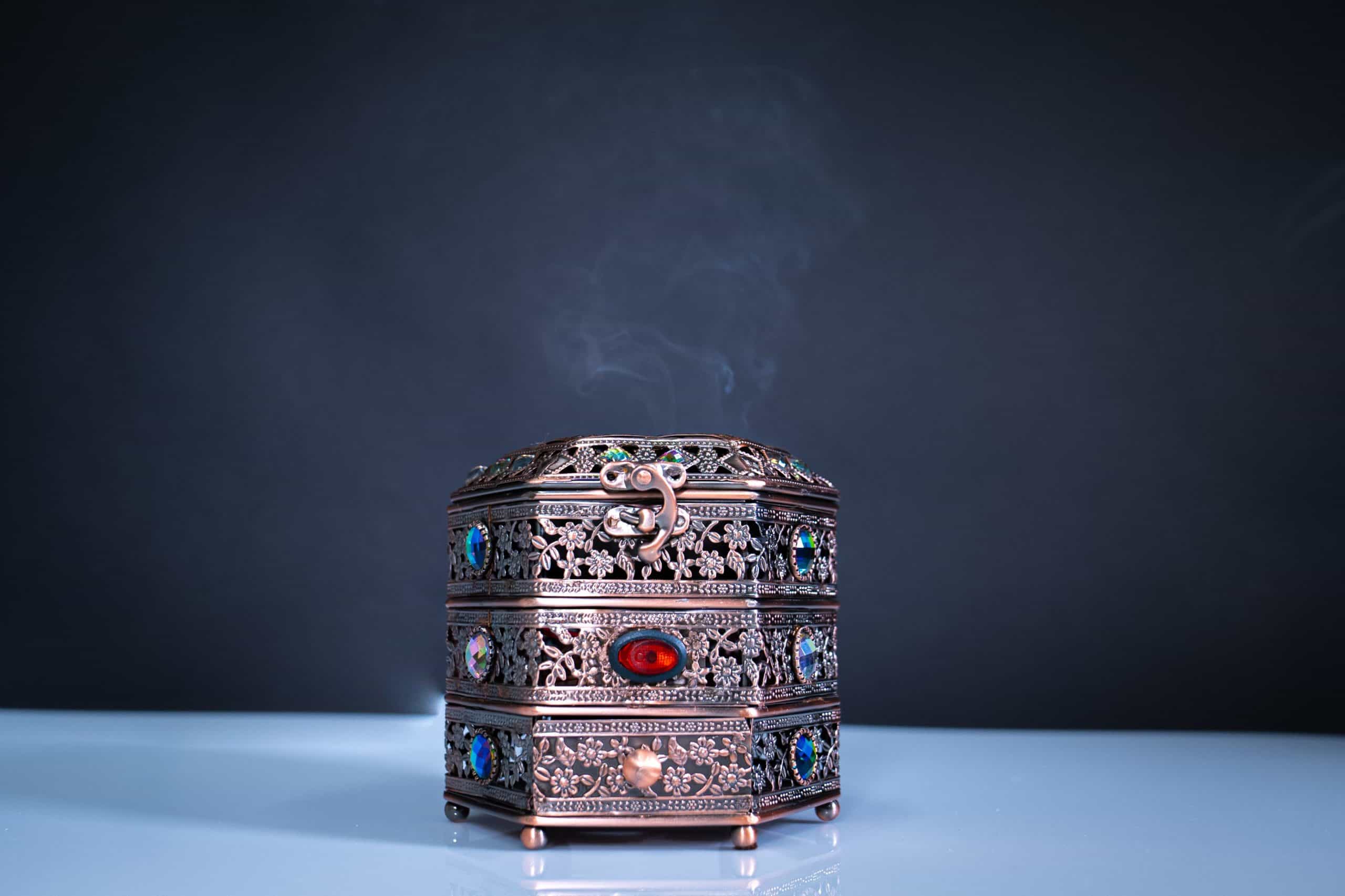
A little goes a long way. The product is available in a 15-gram size, and we recommend breaking off a small amount at a time.
For the gentlest experience, use an appropriate electric burner or another heat-safe method that allows low, indirect heat. Keep the burner on a protected surface, away from curtains, paper, children, pets, and anything that can catch fire. Never leave a heat source unattended.
Bringing Kyphi Into a Modern Aromatherapy Practice
Modern aromatherapy is not about copying an ancient ritual without thought. It is about using scent intentionally and responsibly in a way that fits your own life.
Kyphi may become part of:
- An evening meditation practice
- A quiet reading routine
- A personal transition from work time to rest time
- A reflective journaling session
- A seasonal or spiritual ritual
- A welcoming scent for a calm gathering
- A natural perfuming experience for your home
You do not need to follow a formal ceremony. You can simply warm a very small amount, notice the fragrance, and allow the atmosphere to change.
Some people enjoy pairing incense with other aromatic tools. For a portable and private option, our aromatherapy inhalers offer quick access to pure, authentic essential oil blends wherever the day takes you. Our roll-ons provide another convenient way to include carefully formulated aromatherapy in a daily routine.
These products are not interchangeable with kyphi. Incense is an environmental scent, while an inhaler or roll-on offers a more personal aromatic experience. Choosing between them depends on your preferences, sensitivities, space, and routine.

A Note About Smoke and Responsible Use
Incense smoke is still smoke, even when the ingredients are natural. The U.S. Environmental Protection Agency identifies incense as a possible source of indoor particulate matter and other air pollutants. You can read more in the EPA’s indoor air quality guidance.
Use kyphi occasionally and in a well-ventilated space. Open a window or use appropriate air circulation when outdoor air quality permits. Avoid burning it in a small, closed room or near your face.
If you have asthma, respiratory sensitivity, cardiovascular concerns, are pregnant, or are choosing products for infants or young children, a no-smoke aromatic option may make more sense. You can always ask a qualified healthcare professional for guidance. Aromatherapy and wellness products support personal wellbeing, but they do not replace medical care.
Why Kyphi Still Feels Special
Kyphi remains special because it brings together history, craftsmanship, fragrance, and ritual in one small piece of incense.
It reminds us that scent is not only about making a room smell pleasant. Fragrance can mark a transition, hold a memory, help us pause, or make an ordinary evening feel a little more intentional.
I believe the best way to approach kyphi is with curiosity and respect. You do not need to know all the ancient ingredients or understand every historical detail before you try it. Begin with a small amount. Use gentle heat. Notice the sweet, earthy, resinous aroma as it develops.
If you are interested in exploring this ancient Egyptian incense, you can visit our Kyphi Egyptian Incense listing. And if you are not sure whether kyphi, an aromatherapy inhaler, a roll-on, or another aromatic product fits your routine, please reach out with your questions. We can decide together what makes the most sense for you.